
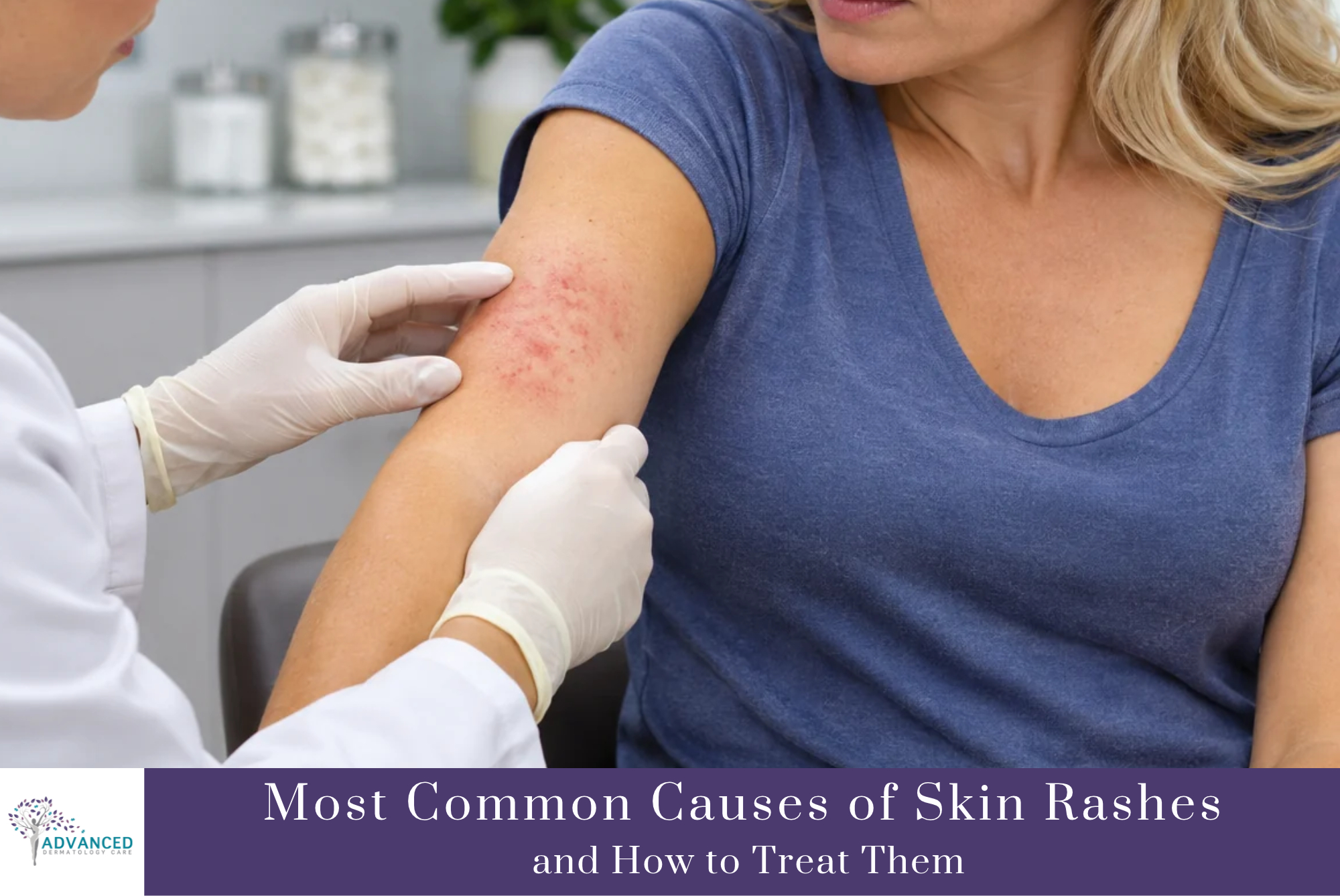
A skin rash can appear suddenly or develop gradually over several days. Some rashes are temporary reactions to environmental exposures, while others indicate chronic inflammatory disease, infection, medication reactions, or systemic illness.
Because many dermatologic conditions produce similar symptoms, identifying the underlying cause is essential for effective treatment.
At Advanced Dermatology Care, with offices in Los Alamitos and Agoura Hills, California, dermatologic evaluations help patients understand persistent or unexplained rashes and determine appropriate management.
What Is a Skin Rash?
A rash is a visible change in the skin’s appearance, texture, or color.
It can involve redness, darker discoloration, raised bumps, blisters, scaling, swelling, or other abnormalities.
Some rashes itch intensely, while others produce burning, tenderness, or pain.
Dermatologists evaluate lesion appearance, distribution, duration, associated symptoms, and possible exposures to determine the diagnosis.
1. Contact Dermatitis
Contact dermatitis develops after exposure to an irritant or allergen.
Irritant contact dermatitis can result from soaps, detergents, cleaning products, or repeated handwashing.
Allergic contact dermatitis involves an immune reaction to substances such as nickel, fragrances, preservatives, or adhesives.
Treatment involves identifying and avoiding the triggering substance, restoring the skin barrier, and using appropriate anti-inflammatory medications.
Patch testing can help identify delayed contact allergies.
2. Eczema
Atopic dermatitis produces dry, itchy, inflamed patches that often recur.
The condition involves skin barrier dysfunction and immune-system abnormalities.
Treatment typically includes consistent moisturizing, gentle skincare, and prescription anti-inflammatory therapies when necessary.
Moderate to severe eczema can require advanced systemic treatment.
3. Psoriasis
Psoriasis is an immune-mediated condition that commonly produces well-defined plaques with scaling.
It frequently affects the elbows, knees, scalp, and lower back.
Treatment can include topical corticosteroids, vitamin D analogues, phototherapy, oral medications, or biologic therapies.
Patients with psoriasis should report persistent joint pain or morning stiffness because these symptoms can indicate psoriatic arthritis.
4. Fungal Infections
Ringworm and other superficial fungal infections can produce itchy, scaly patches.
Some lesions have a circular appearance with a more active outer border.
Treatment generally involves antifungal medications.
Applying topical corticosteroids without confirming the diagnosis can worsen dermatophyte infections and alter their appearance.
5. Hives (Urticaria)
Hives are raised, itchy welts that can appear suddenly and change location.
Individual welts usually resolve within 24 hours, although new ones can continue developing.
Triggers include infections, medications, physical stimuli, and allergic reactions.
Many cases have no identifiable external trigger.
Second-generation antihistamines are commonly used for treatment.
Hives accompanied by breathing difficulty, throat swelling, or faintness require emergency medical attention.
6. Heat Rash
Heat rash, also called miliaria, develops when sweat becomes trapped within the skin.
It commonly appears during hot weather, exercise, or prolonged exposure to humid environments.
Symptoms can include small bumps, prickling sensations, and itching.
Cooling the skin, wearing breathable clothing, and reducing sweating generally help.
7. Medication-Related Rashes
Certain medications can trigger inflammatory skin reactions.
Symptoms range from mild, widespread eruptions to rare but serious reactions.
A rash accompanied by fever, painful skin, blistering, facial swelling, or mouth sores requires urgent medical assessment.
Patients should not independently stop essential prescription medications without appropriate medical guidance unless emergency instructions require immediate action.
8. Bacterial Skin Infections
Bacterial infections such as impetigo, folliculitis, and cellulitis can cause redness, tenderness, pustules, crusting, or swelling.
Cellulitis commonly produces expanding warmth, pain, and redness or discoloration.
Treatment depends on the organism and severity and can require prescription antibiotics.
Rapidly spreading inflammation, fever, or significant pain warrants prompt evaluation.
9. Viral Skin Rashes
Viral infections can cause a variety of skin eruptions.
Shingles, caused by reactivation of varicella-zoster virus, commonly produces a painful, blistering rash in a localized distribution.
Early antiviral treatment can reduce disease severity and certain complications.
A suspected shingles rash involving the eye or forehead requires urgent medical attention.
10. Seborrheic Dermatitis
Seborrheic dermatitis affects oil-rich areas such as the scalp, eyebrows, nose, and chest.
It produces flaky scaling, irritation, and inflammation.
Treatment often involves antifungal shampoos or creams and selected anti-inflammatory medications.
How Dermatologists Diagnose Unexplained Rashes
Diagnosis begins with a detailed history and skin examination.
Important factors include when the rash appeared, whether it itches or hurts, recent medications, occupational exposures, travel, new skincare products, and associated illnesses.
Additional testing can include fungal microscopy, bacterial culture, patch testing, or skin biopsy.
The American Academy of Dermatology provides educational information about common inflammatory and infectious skin disorders.
Why Treating Every Rash the Same Way Can Be Harmful
Different rashes require different treatments.
For example, a topical corticosteroid can improve eczema but worsen an untreated fungal infection.
Antibiotics are useful for certain bacterial infections but do not treat ordinary eczema or viral rashes.
Accurate diagnosis reduces unnecessary medication use and helps prevent complications.
When Is a Skin Rash an Emergency?
Seek immediate medical care for a rash accompanied by difficulty breathing, throat swelling, rapidly spreading purple spots, severe skin pain, extensive blistering, or signs of a severe medication reaction.
Fever with a widespread rash, involvement of the mouth or eyes, or rapidly worsening infection also requires urgent evaluation.
Professional Rash Evaluation in Southern California
Advanced Dermatology Care serves patients in Los Alamitos, Agoura Hills, and surrounding communities who need evaluation of recurring, persistent, or unexplained skin rashes.
Early diagnosis can reduce discomfort, identify treatable causes, and help prevent unnecessary complications.
Frequently Asked Questions About Skin Rashes
What is the most common cause of an itchy rash?
Eczema, contact dermatitis, hives, fungal infections, and insect bites are common causes. The most likely diagnosis depends on the rash’s appearance and history.
How can I tell whether a rash is fungal or eczema?
Fungal infections often have characteristic borders or scaling patterns, but appearances overlap. A dermatologist can perform testing when necessary.
Can stress cause a skin rash?
Stress can aggravate eczema, psoriasis, hives, and other inflammatory skin conditions.
When should I worry about a rash?
Seek medical attention for persistent, worsening, painful, widespread, or unexplained rashes. Emergency symptoms include breathing difficulty, severe blistering, or significant systemic illness.
Can a rash indicate an autoimmune condition?
Yes. Certain autoimmune disorders can produce distinctive skin findings, although most common rashes are not caused by systemic autoimmune disease.
Should I use hydrocortisone on every rash?
No. Hydrocortisone can help certain inflammatory conditions but can worsen fungal infections or mask other diagnoses.
Are all skin rashes contagious?
No. Eczema, psoriasis, and allergic contact dermatitis are not contagious. Certain fungal, bacterial, viral, and parasitic conditions can spread.
How long should a rash last before seeing a dermatologist?
A rash that persists, recurs, or worsens despite appropriate basic care should be evaluated. Concerning symptoms warrant earlier assessment.
Contact Information
Advanced Dermatology Care
Los Alamitos Office
3851 Katella Avenue, Suite 105
Los Alamitos, CA 90720
Phone: (562) 799-3330
Agoura Hills Office
30300 Agoura Road, Suite 200
Agoura Hills, CA 91301
Phone: (818) 706-3744
Website: mddermcare.com
Book Online: Schedule Your Appointment
If you are experiencing a persistent or unexplained rash, schedule a professional dermatologic evaluation.